
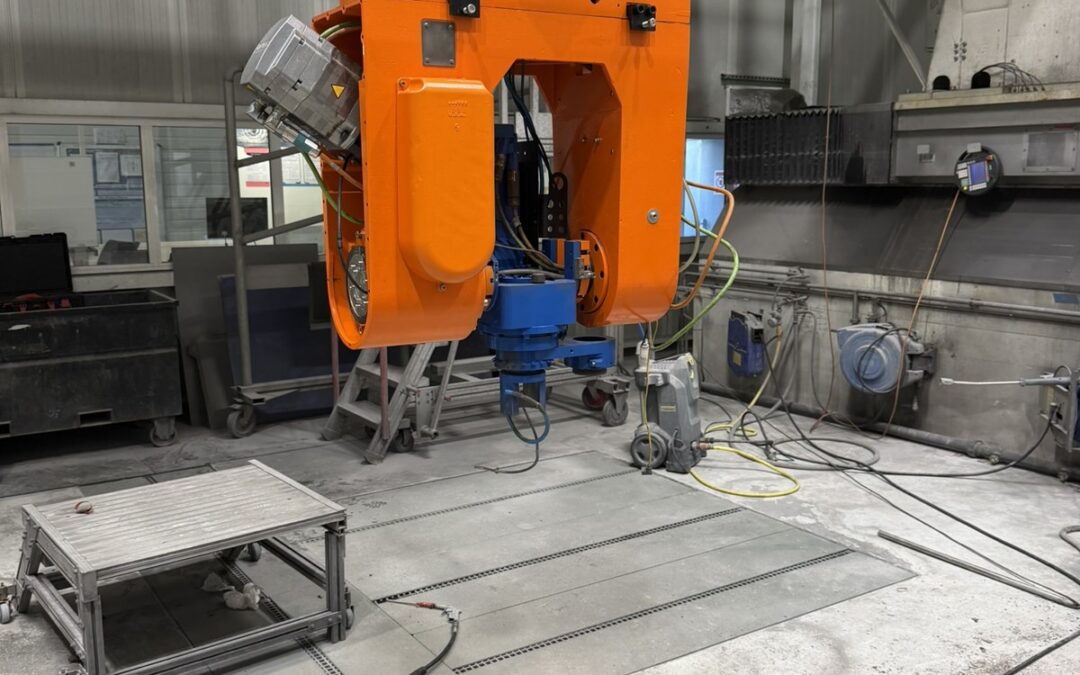
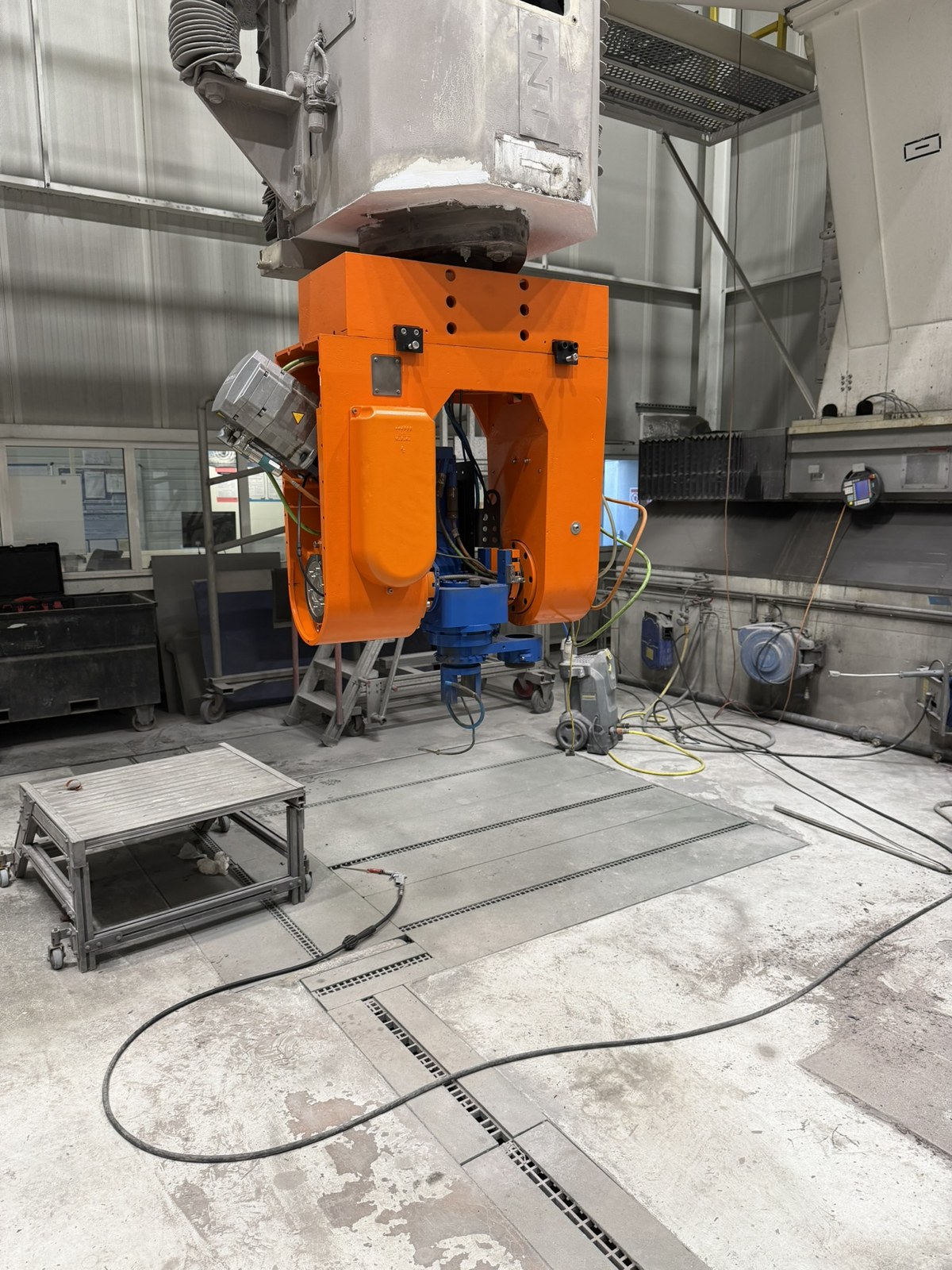
In early August our engineers completed a cutting-head exchange on a large-format 5-axis waterjet gantry for an aerospace customer. The machine was handed back to production in exactly two weeks — and the story of those two weeks says a lot about how we think machine tool service should work.
Why the head came off
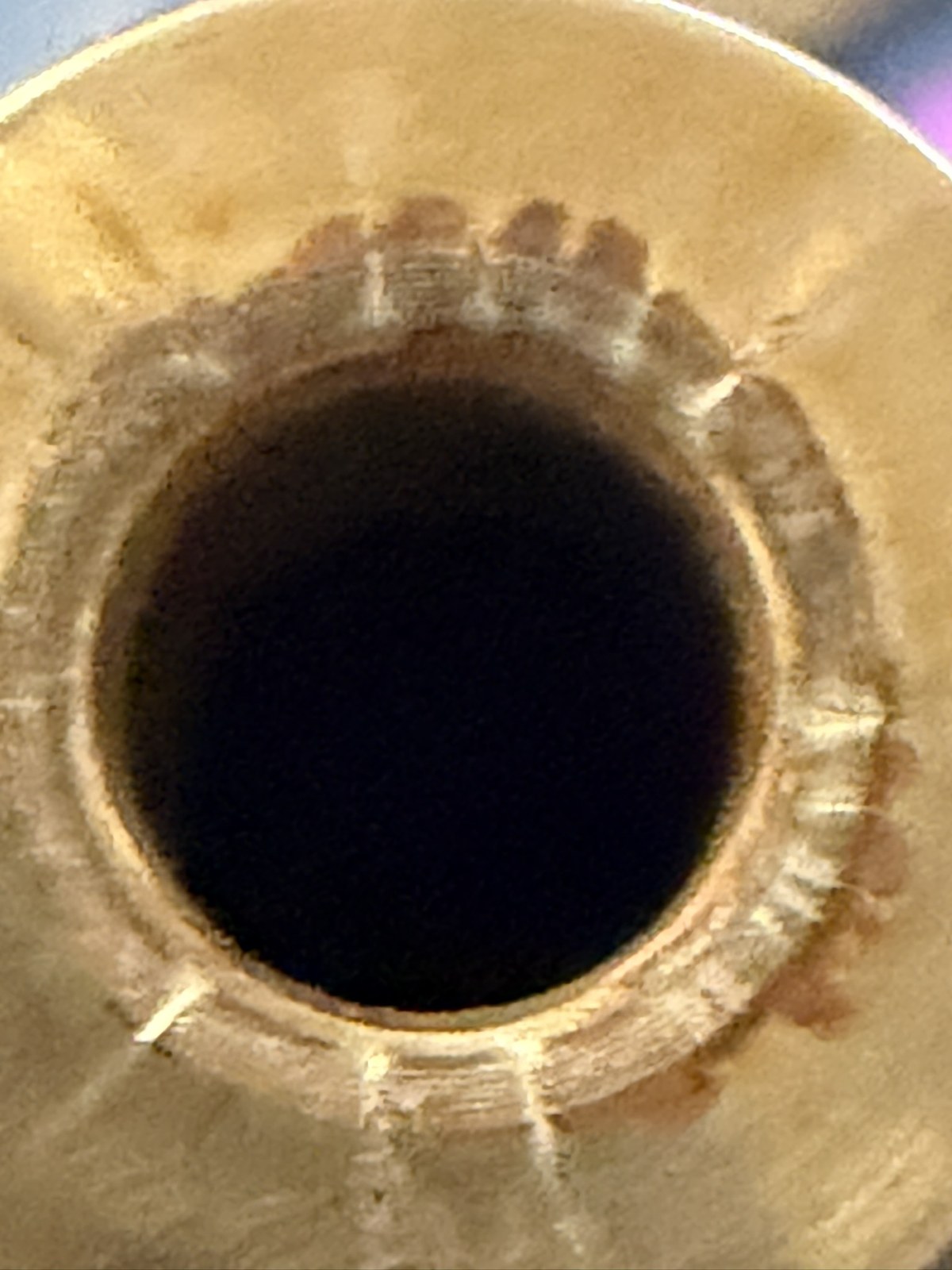
Waterjet cutting heads lead a hard life. Abrasive, high-pressure water and thousands of operating hours gradually wear the mechanics that carry the cutting nozzle — and with them goes the geometric accuracy the machine was built for.
An exchange, not a rebuild
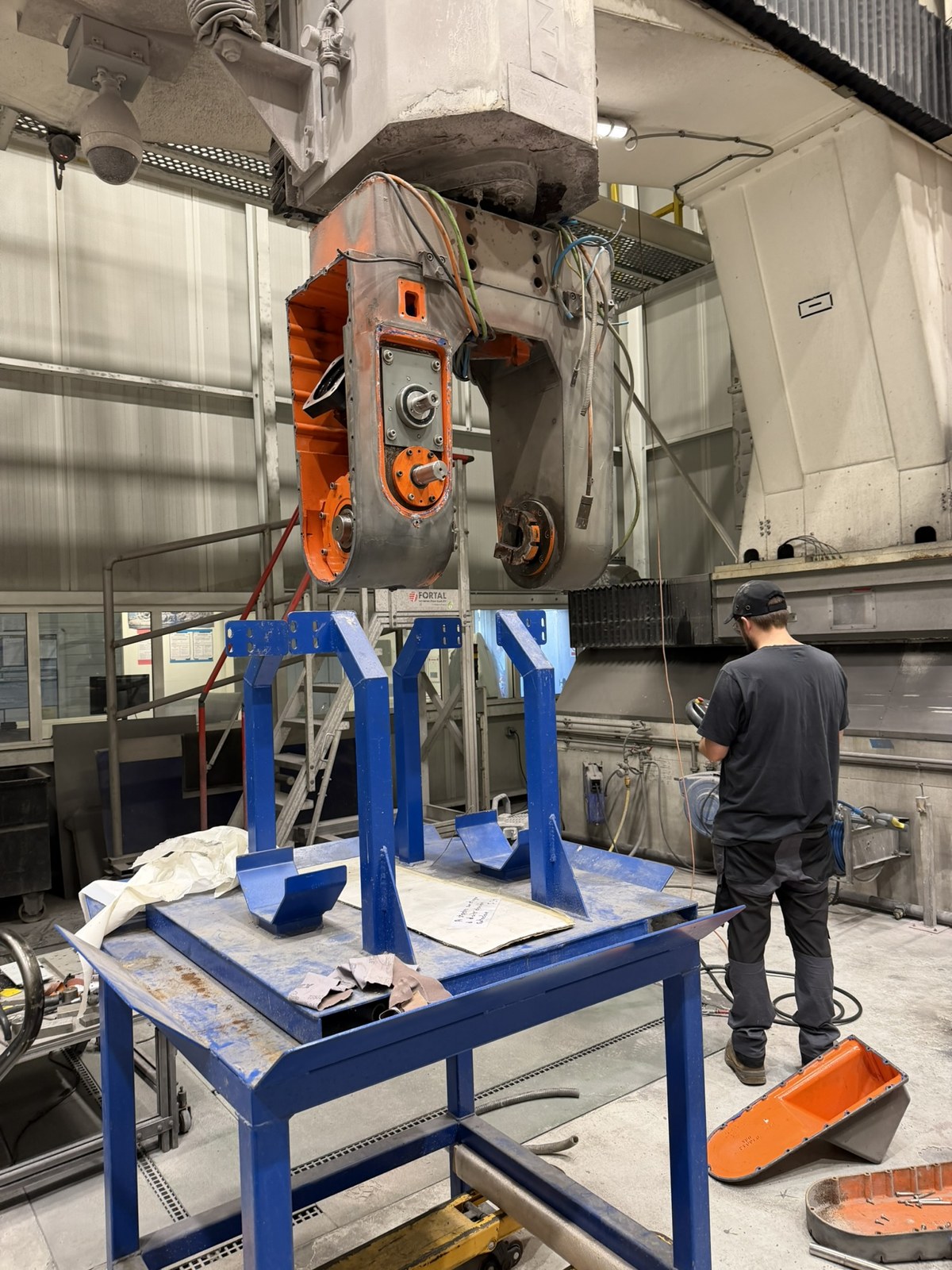
Rebuilding a head on the machine means the machine is down for the whole rebuild. We work differently: a fully refurbished head, built up and tested in our own workshop on our own time, travels to site. The original head comes off, the refurbished unit goes on, and the worn head returns to our workshop to become the next exchange unit.
Alignment is the real work
Fitting the head is the quick part. What decides whether the machine cuts accurately is everything that follows: complete mechanical geometric alignment of the new head to the machine, measured with dial test indicators against precision references.
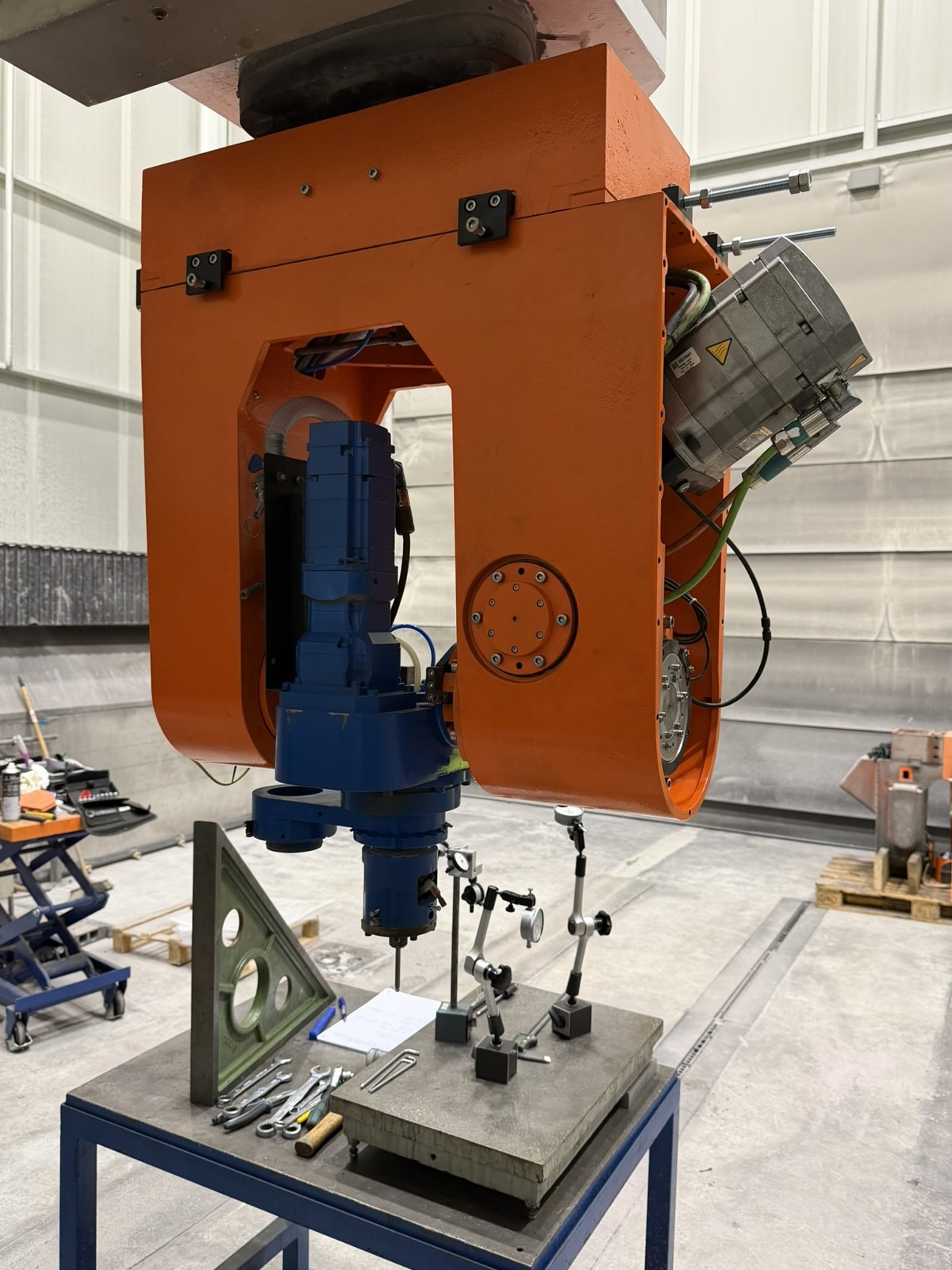
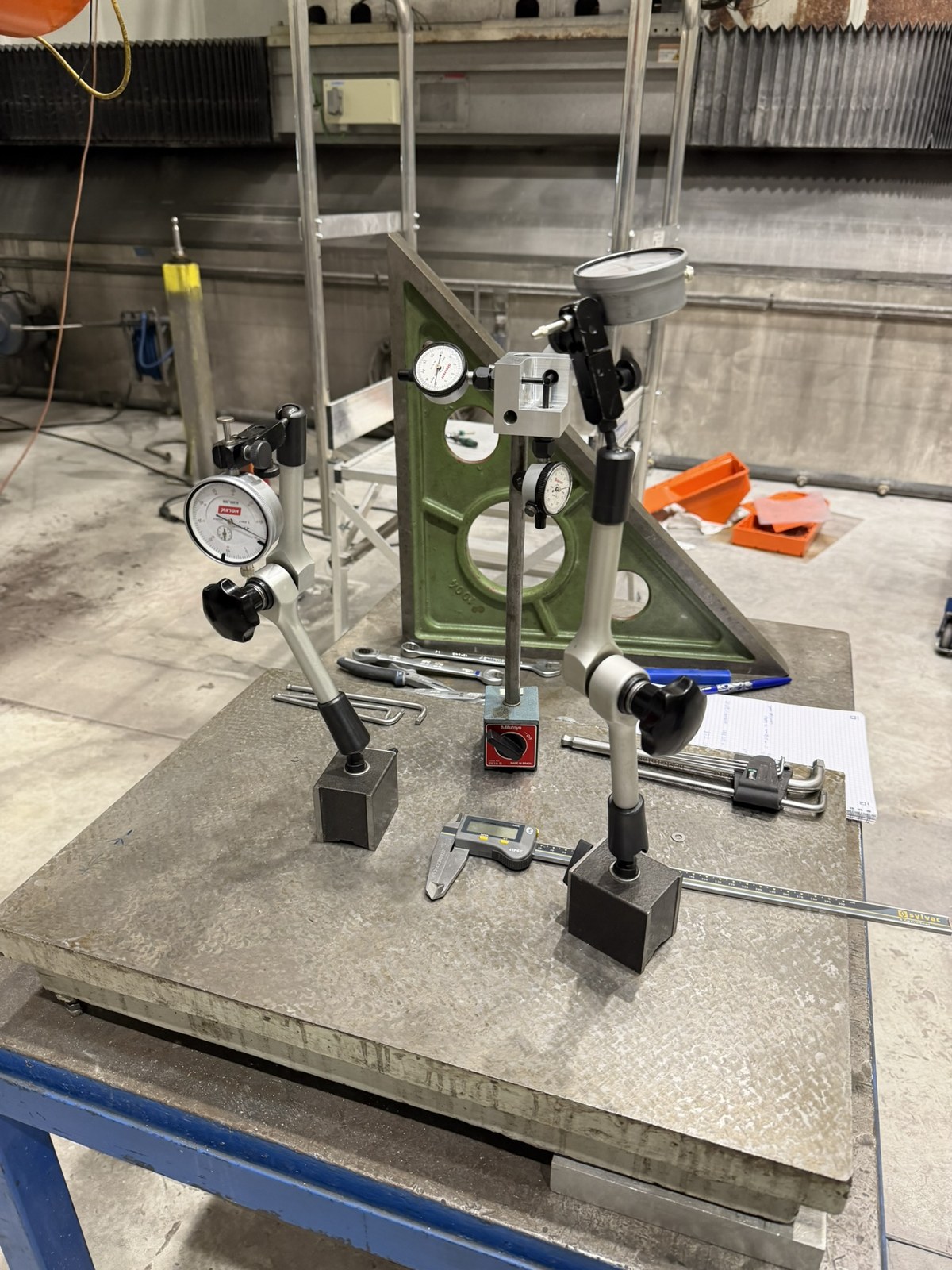
B-axis angular accuracy is verified through its full working range to our documented work instructions, probe and nozzle offsets are recalibrated, and the compensation data in the control is updated to match the machine as it actually stands — the same discipline we described in our article on why metrology matters for your CNC machine tools.
Tested to aerospace standards
Before handover, the machine ran the customer’s standard acceptance checks: test cuts, measured and documented, to the standards an aerospace production line demands. Work started on 30 July; the machine was back in production on 12 August.
See it back in action
The proof, in motion: the head travelling the gantry, a probe test on the monument and a test cut in the coupon. This machine has been upgraded in stages during its scheduled summer and winter shutdowns since 2023 – all linear guides replaced, both 5-axis heads exchanged and software improvements along the way. Planned interventions, no unplanned downtime.
What this means for your machines
An exchange programme turns a major overhaul into a planned, short intervention: the rebuild happens in our workshop, your machine is only down for the swap and the alignment. If you run waterjet or CNC machinery with ageing heads, spindles or wrist units, we are happy to discuss what an exchange programme could look like for your fleet — the initial conversation costs nothing.