
When the control platform of a large-format machine tool reaches end of life, the owner faces an uncomfortable choice. A comparable new machine can run well past four million euros and carry a lead time approaching 30 months. Doing nothing means rising downtime risk, scarce spares and fading accuracy.
There is a third route: a full retrofit. Not a repair — a platform transformation that returns a machine to service with modern control, better-than-original mechanical performance and a fraction of the investment. Here is what that looks like, drawn from a complete retrofit programme we have engineered for a large-format 5-axis machine running an obsolete Siemens Powerline control.
Structure first: a stiffer machine than the day it was built
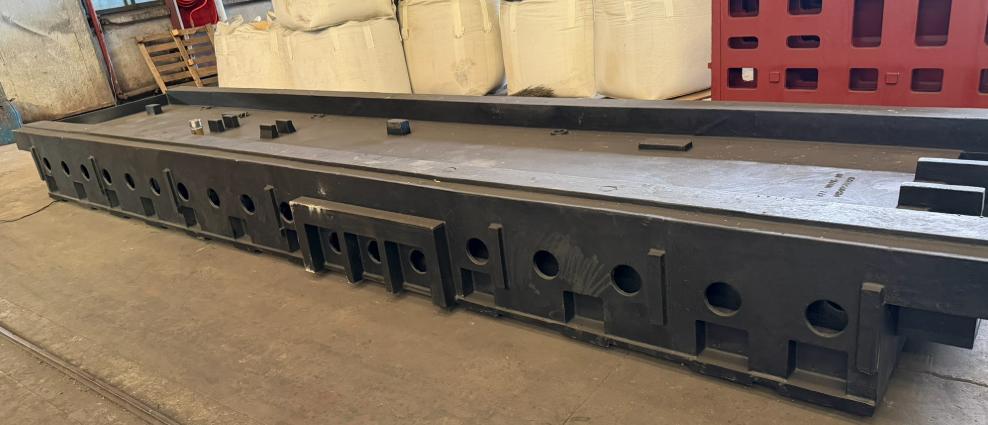
Accuracy starts in the iron. The programme replaces the original fabricated carbon-steel bases with new cast HT300 bases — an increase in structural stiffness of around 80% — installed on new base-adjusting fixators for long-term alignment stability. Structural steel is blasted and epoxy-coated, corroded floor support points are repaired, and the machine is set on a new concrete bed. The same works extend the X-axis working envelope to 15 metres, so the machine comes back not just better, but bigger.
Control: Siemens Powerline to SINUMERIK ONE
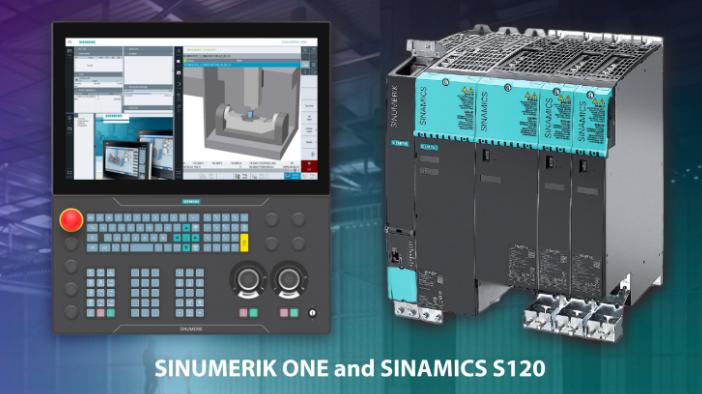
At the heart of the transformation is a complete SINUMERIK ONE package: new PLC, drives and motors throughout, TRAORI five-axis transformation, and integrated safety software. Critical adjustment functions move from mechanical setup to software control — calibration becomes digital, repeatable and serviceable. Obsolescence risk is replaced by a platform Siemens will support for decades.
Motion and spindle: accuracy you can measure
Heidenhain linear scales on every axis close the feedback loop digitally over the full travel. Tandem drives across the linear motion package — module 80 rack on the gantry axes, module 60 on Y and Z — give the large-format axes the drive stiffness they never had. A new 2-axis wrist carries a 25 kW, 24,000 rpm spindle with secondary glass encoders for feedback at the tool tip.
The details that lower operating cost
A stainless-steel tool changer with a tool-management interface, refreshed auxiliary systems, and a new water-filtration system that recycles 75% of cooling water — the unglamorous items that decide what a machine costs to run for the next twenty years.
Executed off-site, commissioned on-site
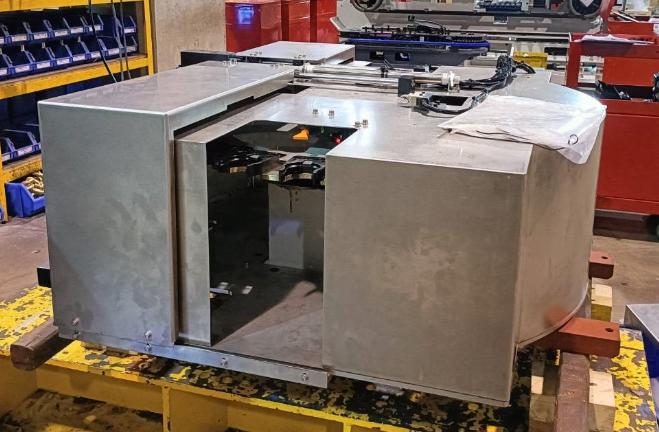
The machine is removed and transported to a workshop for the core works: stripping, structural rebuild, control integration and verification in controlled conditions — then returned, reinstalled, aligned and commissioned on site. Disruption to surrounding production is kept to the ends of the programme, not its middle. Commissioning is followed by three months of on-site support, twelve months of monthly service visits, and a full manufacturer’s warranty on all new equipment.
The commercial case
The complete programme comes in at roughly half the investment of a comparable new machine — delivered in under 12 months against a typical new-machine lead time of around 30. And because the SINUMERIK ONE engineering is developed once, a second machine of the same type retrofits for substantially less: the first project funds a fleet strategy.
If you operate large-format machines on ageing controls, we are happy to talk through what a retrofit could look like for your fleet — without obligation or cost.